
Vinyl Fence Cleaning: What to Check Before You Wash

A vinyl fence can look tired because of surface buildup without needing replacement. Before cleaning, separate dirt and staining from cracks, loose parts and other damage that a wash cannot fix.
For Nashville homeowners, the useful questions are straightforward: what is the fence made of, what condition is it in, and what does its manufacturer allow? The answer should guide the cleaning method.
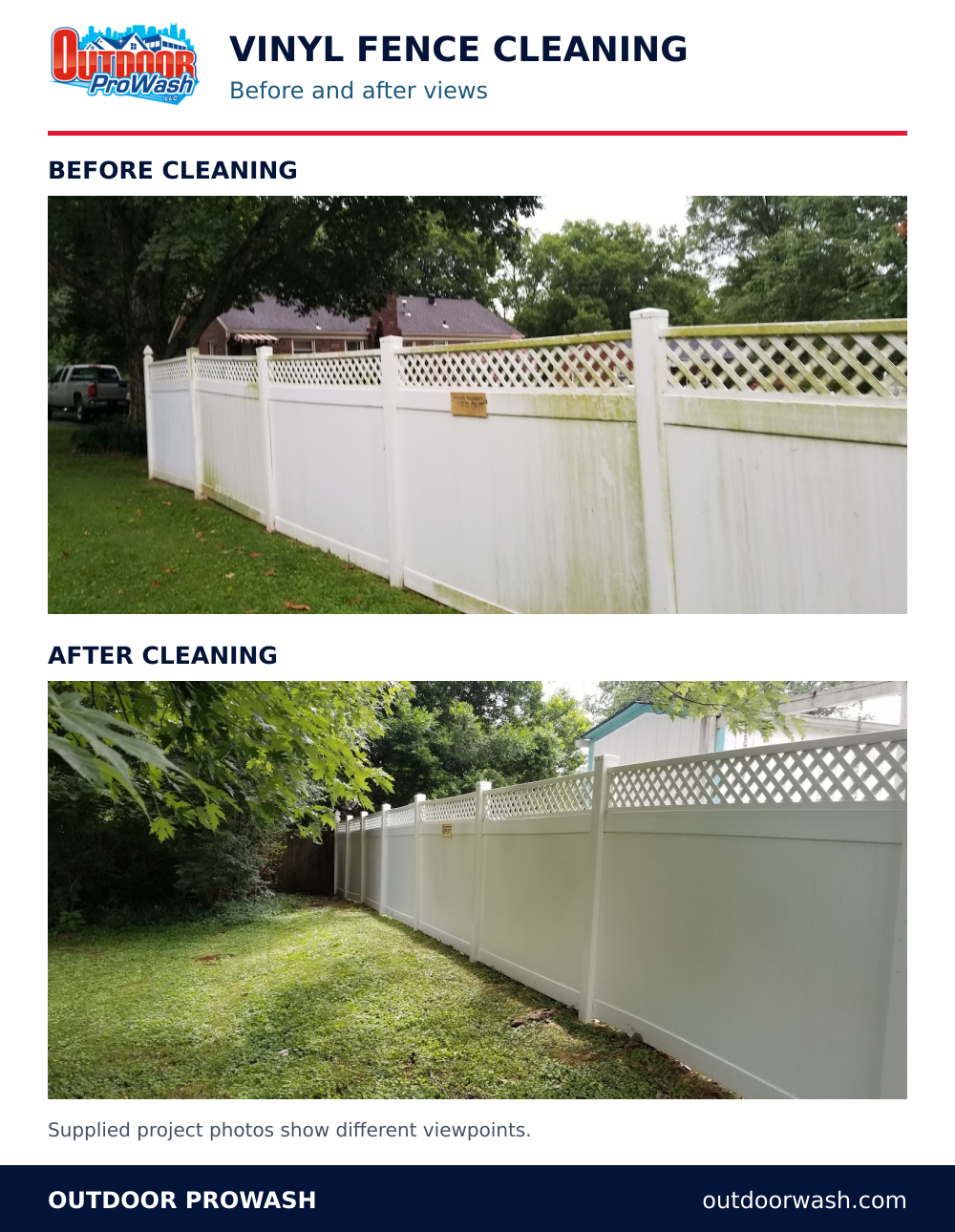
Inspect before choosing a method
Walk along the accessible sides of the fence and look at panels, posts, gates and caps. Photograph the areas you want cleaned and point out broken or loose parts before work begins. Do not lean a ladder against a questionable panel or reach into a neighbor’s property without permission.
- Loose caps, rails or fasteners need attention before washing.
- Cracks, leaning posts and gates that do not close are repair concerns.
- Paint, coatings or previous repairs may change the approach.
- Stains, fading and surface wear may not all respond to cleaning.
Follow the instructions for your fence
Check the care guide for your particular brand and finish. For example, VEKA’s fence-care guidance describes gentle cleaning with a garden hose and soft brush, and warns that concentrated pressure can permanently damage vinyl. That is guidance for its products, not a substitute for your own manufacturer’s instructions.
More pressure is not automatically a better answer. Cleaner compatibility, the surface condition and how the work is carried out matter. Ask how a proposed method will be checked on a small, inconspicuous area before treating the whole fence.
Be clear about the result you want
Cleaning can address surface buildup; it does not straighten posts, replace damaged panels or restore missing material. Tell us about marks that concern you and ask which are likely to improve and which may remain.
A photograph helps start the conversation, but it cannot establish every stain’s cause or the condition of the entire fence. Avoid assuming that every dark mark is mold or that every panel will return to its original color.
Agree on both sides and the surroundings
An estimate should say whether it covers one side or both, along with gates, posts and any separate surfaces. Access to the other side may involve a neighbor or shared boundary, so settle that before work is scheduled.
- Approximate fence length and height, if known.
- Photos of the overall fence and close-ups of problem areas.
- Which sides and gates you want included.
- Access limitations, plants and nearby belongings.
- Known damage, coatings and the fence brand, if available.
Discuss moving items and managing nearby planting areas before the visit. Keep children and pets away from the work area according to the agreed plan.
Plan care around actual condition
Check the fence periodically rather than waiting until every section looks the same. Record recurring trouble spots so the next cleaning request is specific. A cleaning interval should reflect your fence’s condition and its manufacturer’s guidance, not a blanket promise about lifespan.
Ask about vinyl-fence cleaning
Explore our fence services and identify your fence as vinyl when requesting an estimate. Share a few photos, the approximate fence size and whether you want one or both sides cleaned. We’ll review the condition and discuss a clear scope for your estimate.
Updated November 14, 2026. Originally published March 19, 2023.
Discover more from Outdoor ProWash
Subscribe to get the latest posts sent to your email.